The EU’s Packaging and Packaging Waste Regulation 2025/40 (PPWR) officially came into effect on February 11, 2025, and will be implemented in phases starting in August 2026. This regulation replaces the previous Packaging and Packaging Waste Directive (Directive 94/62/EC), unifying the management of packaging throughout its entire lifecycle and strengthening the implementation of the circular economy.

China’s Water-Coated Paper Industry Ushers in Greater Development Opportunities Driven by the dual demands of “plastic substitution” and “true recycling,” the technological advantages of Chinese water-coated paper make it a star material within the PPWR framework, ushering in huge export opportunities.

1. Core Advantages of Water-Coated Paper: Defining a New Standard for Environmental Packaging
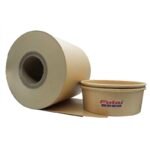
Water-based barrier coated paper (hereinafter referred to as: water-coated paper) is a high-performance paper-based material that uses a functional coating (such as water-resistant and oil-resistant) with water as the dispersion medium to treat the surface of the base paper. The revolutionary aspect of water-coating technology lies in its successful replacement of the difficult-to-recycle plastic lamination process (such as PE/PLA lamination). Its core value proposition is repulpability and recyclability, aiming to promote a circular economy and sustainable development.

2. Why Does Water-Coated Paper Perfectly Match PPWR?
First, it overcomes the core challenge of “recyclability.” Traditional PE-laminated paper cups are extremely difficult to recycle. Certified renewable water-based coatings can easily separate from fibers during standard pulping processes and are even biodegradable, significantly improving the recycling efficiency and quality of recycled pulp in paper packaging. This meets PPWR’s mandatory requirements for high-grade (e.g., Grade A) recyclability.
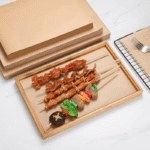
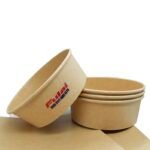
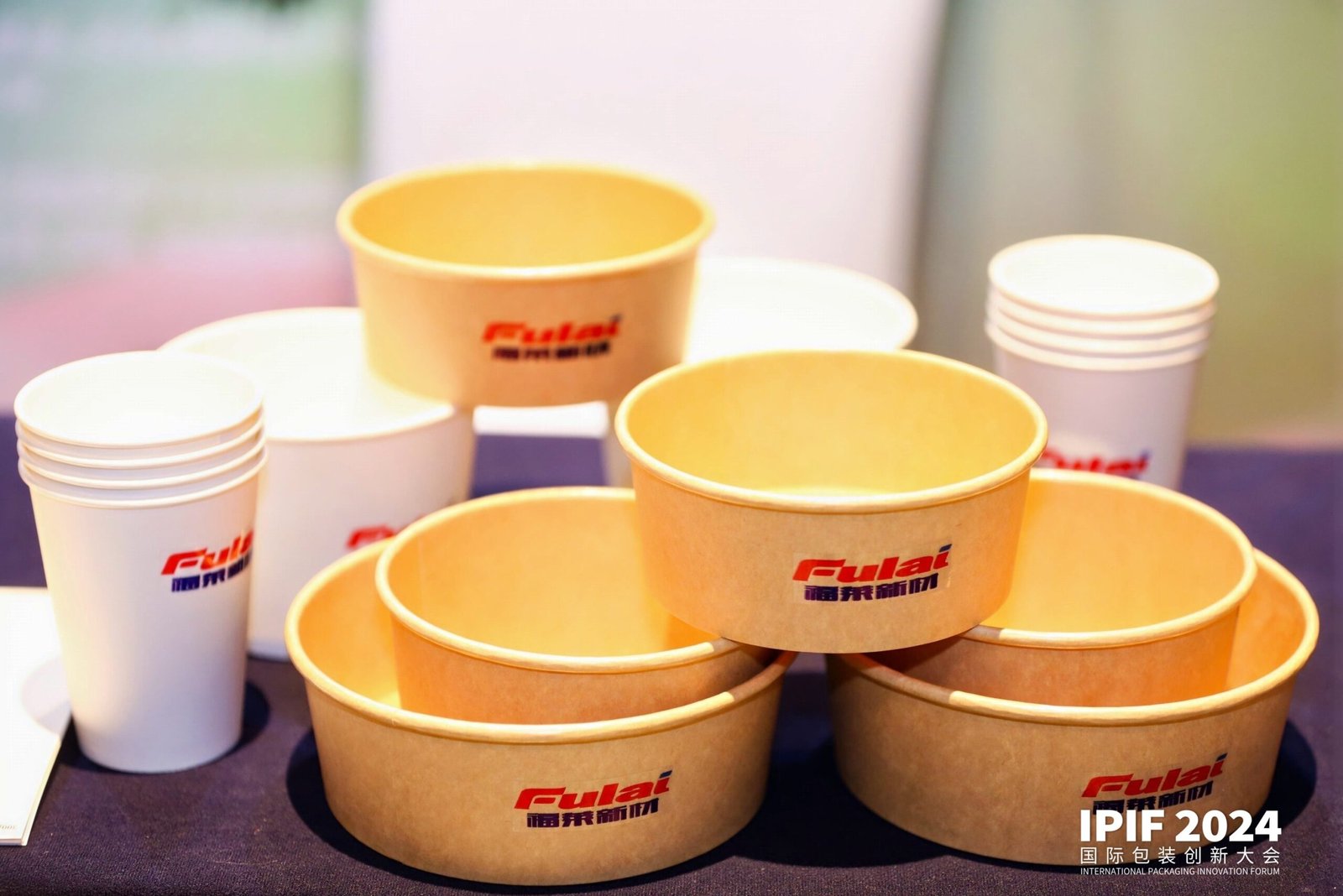
Secondly, they can directly replace banned plastic packaging. In areas directly restricted by PPWR, such as takeout containers, food bags, and beverage cups, water-coated paper is one of the closest functional and most environmentally friendly alternatives.
furthermore, some newly developed water-coated paper products, such as water-based PHA/PLA coated paper and starch-based barrier paper, also have composting certification. This gives them a unique advantage in packaging applications targeting food waste collection (such as tea bags, coffee capsules, and fruit and vegetable packaging), enabling organic matter recycling and perfectly aligning with the pathways encouraged by PPWR.

Faced with this historic opportunity, Fulai’s packaging processors, and exporters should formulate the following strategies:
✓ Proactively pursue compliance and obtain a “green pass.” Actively cooperate with European accreditation bodies to ensure product recyclability.
✓ Based on new market development needs, continuously research and develop new water-based coatings with higher barrier properties (high oil resistance, high water resistance, high gas resistance, etc.) and better mechanical strength to expand application scenarios and build a technological moat.
✓ Deepen value chain collaboration and strengthen customer communication. Proactively provide European brand owners with complete technical documentation, including certification reports, Technical Data Sheets (TDS), and Declarations of Conformity (DoC), to build trust and upgrade from a “materials supplier” to a “compliance solutions partner.”
✓ Focus on circular economy and pay attention to carbon footprint. Invest in or cooperate with downstream recycling companies to verify and promote the superior performance of products in closed-loop recycling. Simultaneously, proactively calculate and reduce carbon footprint to address future policies such as the EU’s CBAM.

The implementation of the EU’s PPWR regulation is far more than a simple environmental regulation; it represents a systemic and disruptive market transformation. It has forcefully propelled the packaging value chain towards a fundamental shift towards a circular economy. In this transformation, paper packaging has been given a core mission, and China’s water-coated paper industry, with its leading environmental performance and technological maturity, has ushered in a golden window of opportunity to seize the high-end European market.
Relevant Chinese enterprises should adhere to the core value proposition of water-coated paper as “recyclable and reusable,” actively participate in and promote the implementation of the EU PPWR regulation, and closely cooperate with upstream and downstream partners in the industry chain. Under the guidance of the Environmental Paper Industry Professional Committee, they should deepen communication and contact with relevant domestic and international parties, strengthen collaborative efforts and proactive responses, and jointly promote the high-quality development of new paper-based materials. This aims to secure a favorable position in the global green competition under the major trend of plastic reduction and bans, and to make water-coated paper a “green calling card” for my country’s intelligent manufacturing going global.